
 openelab.de
 openelab.com




NFC, an AI motion sensor, an audio codec, a fuel gauge, 2.4 GHz LoRa. The T-Lora Pager has more hardware than any Meshtastic device — and mesh firmware uses almost none of it. Here's what actually works.
Every Meshtastic handheld we've reviewed here has been a communication device first. The ThinkNode M1 is an e-paper messenger. The ThinkNode M2 is a tiny messenger. The Wio Tracker L1 Pro is a messenger with solar. Same idea each time: get a message in, get a message out, don't die on battery.
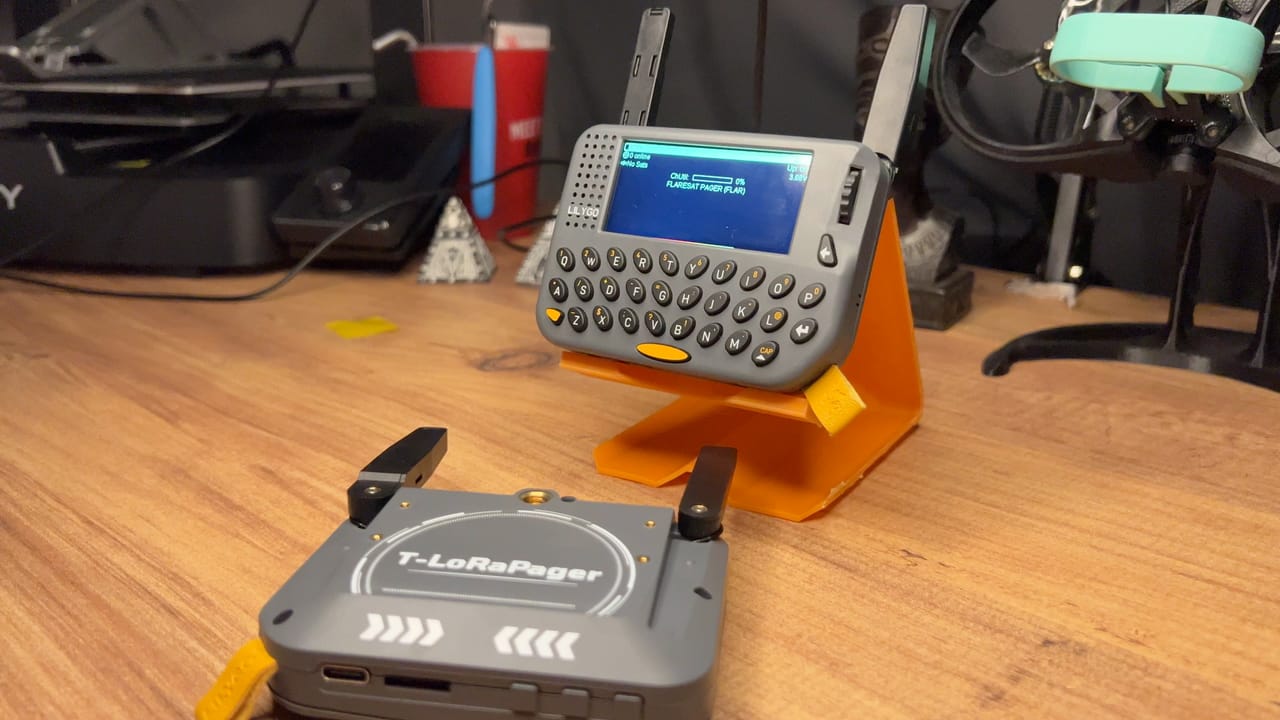
The T-Lora Pager is not that. It's a general-purpose ESP32-S3 handheld computer that happens to ship with a LoRa radio, and Meshtastic is one of several firmwares you can put on it. That distinction explains almost everything good and bad about this device.
Here's the short version, because it took a while to work out. This is the best-built object in the Meshtastic ecosystem, and it's running software that hasn't caught up to it. The shell is superb. The packaging is superb. The keyboard is backlit and genuinely good to type on. There's a speaker that plays proper notification tones, a haptic motor that fires on incoming messages, and you can send a message from the device without touching your phone.
And it currently sits at 2.0 stars on LILYGO's own store.
We've been running it, and we don't think the hardware is why. Let's get into it.
The Variant Maze, Read This Before You Buy
"T-Lora Pager" is not one product. It's one chassis with several different radios, and the radio decides what firmware you can run and which bands you get.
| Version | Radio | Bands |
|---|---|---|
| 433 / 868 / 915 / 920 MHz | Semtech SX1262 | One sub-GHz band, fixed at purchase |
| With LR1121 Module [K257-04] | Semtech LR1121 | 868 + 915 MHz + 2.4 GHz |
| CC1101 | TI CC1101 | Sub-GHz (G)MSK/FSK/OOK — not a mesh radio |
| SX1280 | Semtech SX1280 | 2.4 GHz only |
| 24L01 2.4G Shield [H780] | nRF24L01 | Add-on shield, not LoRa at all |
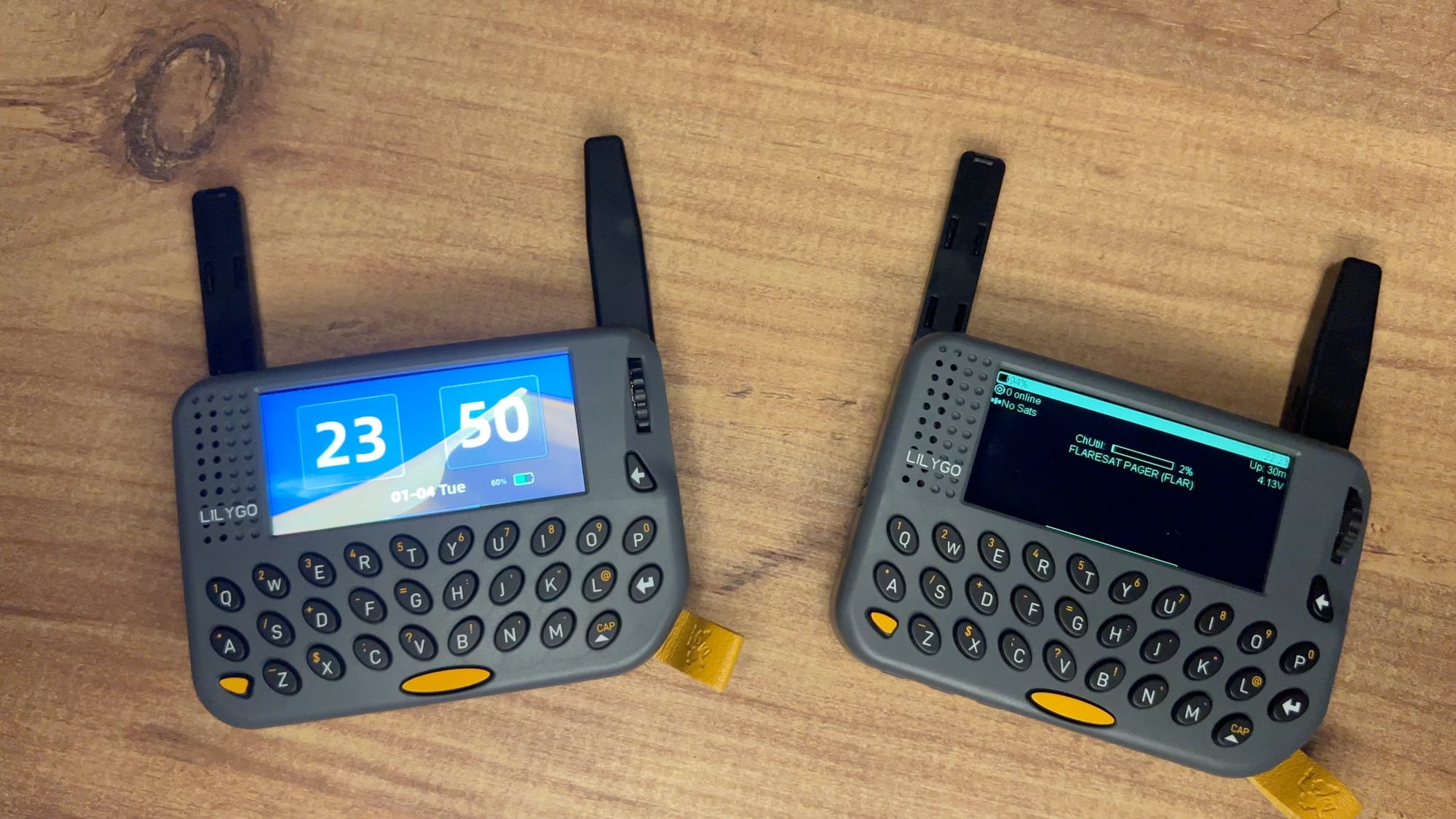
Our unit is the LR1121 version, running EU868. One sub-GHz antenna, and one 2.4 GHz. The SX1262 versions ship with one. If you're looking at a listing photo and counting antennas, you already know which board it is.
Unboxing and First Impressions
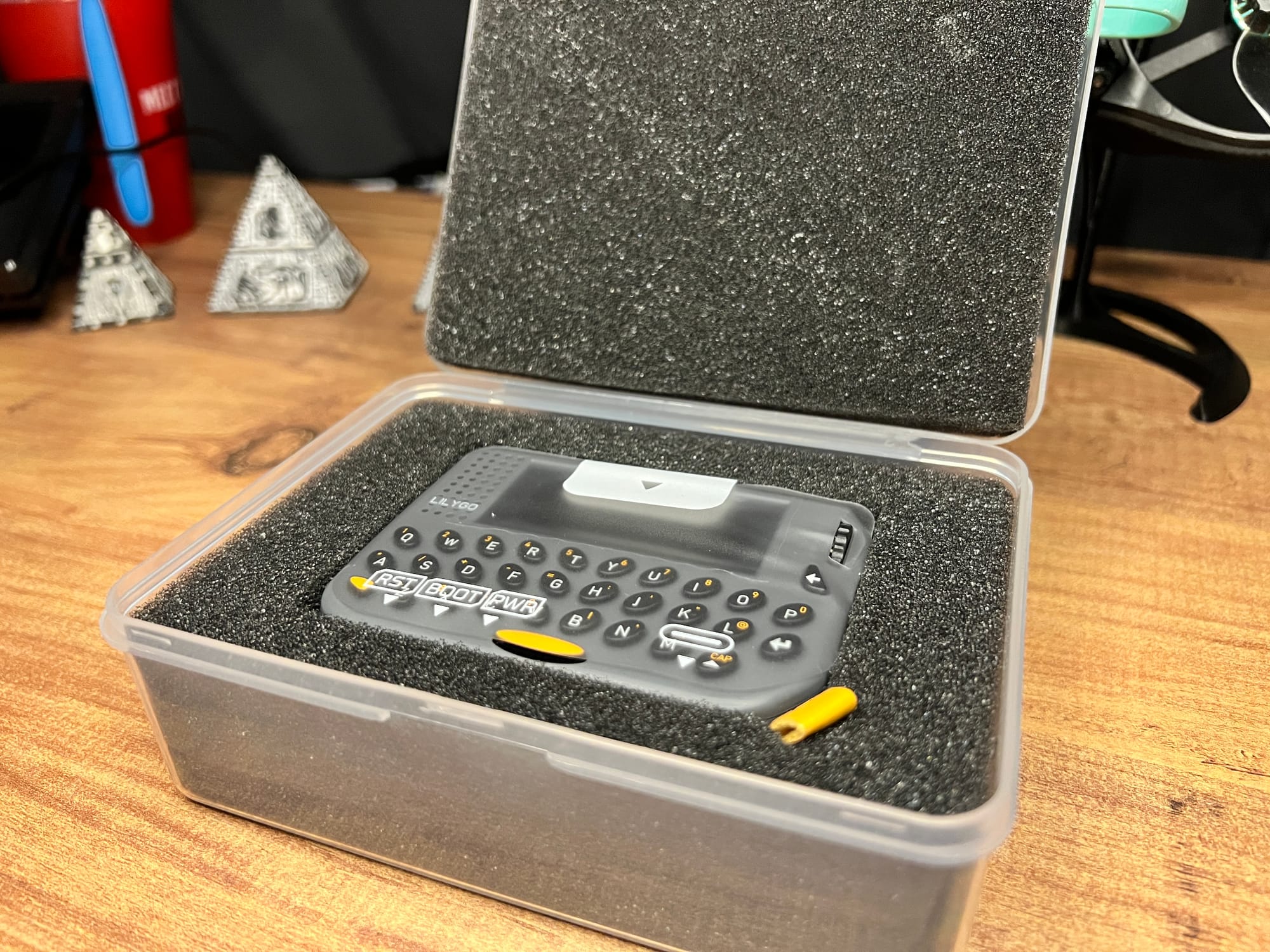
The packaging is the first sign this isn't a bare dev board with delusions. It arrives properly boxed with the device wrapped in protective plastic, closer to unboxing a phone than unboxing a maker board. LILYGO spent money here and it sets the tone.
Lift the two foam inserts and you'll find the extras hiding underneath: an NFC sticker and a set of pin headers for the expansion port. There's no printed manual, no USB cable in our box, and no lanyard. At $88 that is just not acceptable. In the box:
- T-Lora Pager (both antennas permanently attached, they swing out from the back)
- NFC sticker
- Pin headers for development
Build Quality
It's superior, and that's not a "good for the price" hedge. The shell is injection-moulded plastic and the quality of it is high, dense, solid, no creak and no flex when you squeeze it. The plastic doesn't hold fingerprints. It sits flat on a desk without rocking. Of every Meshtastic handheld we've handled, this is the nicest object, and it beats the ThinkNode M1, which we already called premium.
There's a leather tab on the device for clipping a carabiner, which is a nice touch, though no lanyard is included to use with it.
The screen is the other standout. It's a 2.33" IPS panel and the whole thing is usable, no dead border, no chin, the image runs to the edge of its window. It looks like glass. Sunlight readability is good; not flagship-phone good, but you can read it outside without shielding it. The viewing angles are wide enough that you'd be forgiven for guessing OLED. The one downside is that it's a proper fingerprint magnet, unlike the body.
The keyboard is excellent. We're saying this plainly because it contradicts what you'll read on LILYGO's store page, where several buyers report the spacebar working loose or popping off. Some people are clearly having that problem. Ours isn't. The keyboard feels really good, nothing is loose, and it's pleasant to type on.
The Antennas Are the One Real Build Complaint
You get two on the LR1121 version, tucked flat against the back, one on each side. Each swings out through 180 degrees like the hand of a clock, push it one way and it is out, push it back and it is tucked in.
They're flimsy. They don't hold position properly, and the whole action feels wobbly and cheap in a way nothing else on this device does. It's the one part that feels value-engineered, which is an odd place to save money given the foldable antenna design is the headline of LILYGO's own marketing.
The two are identical in length, and there's no marking on the device telling you which is which. Going by LILYGO's own product photography, the left one is the 2.4 GHz.
The device does still work with both antennas folded flat, which is useful to know for pocket carry.
The Buttons Are a Genuine Design Failure
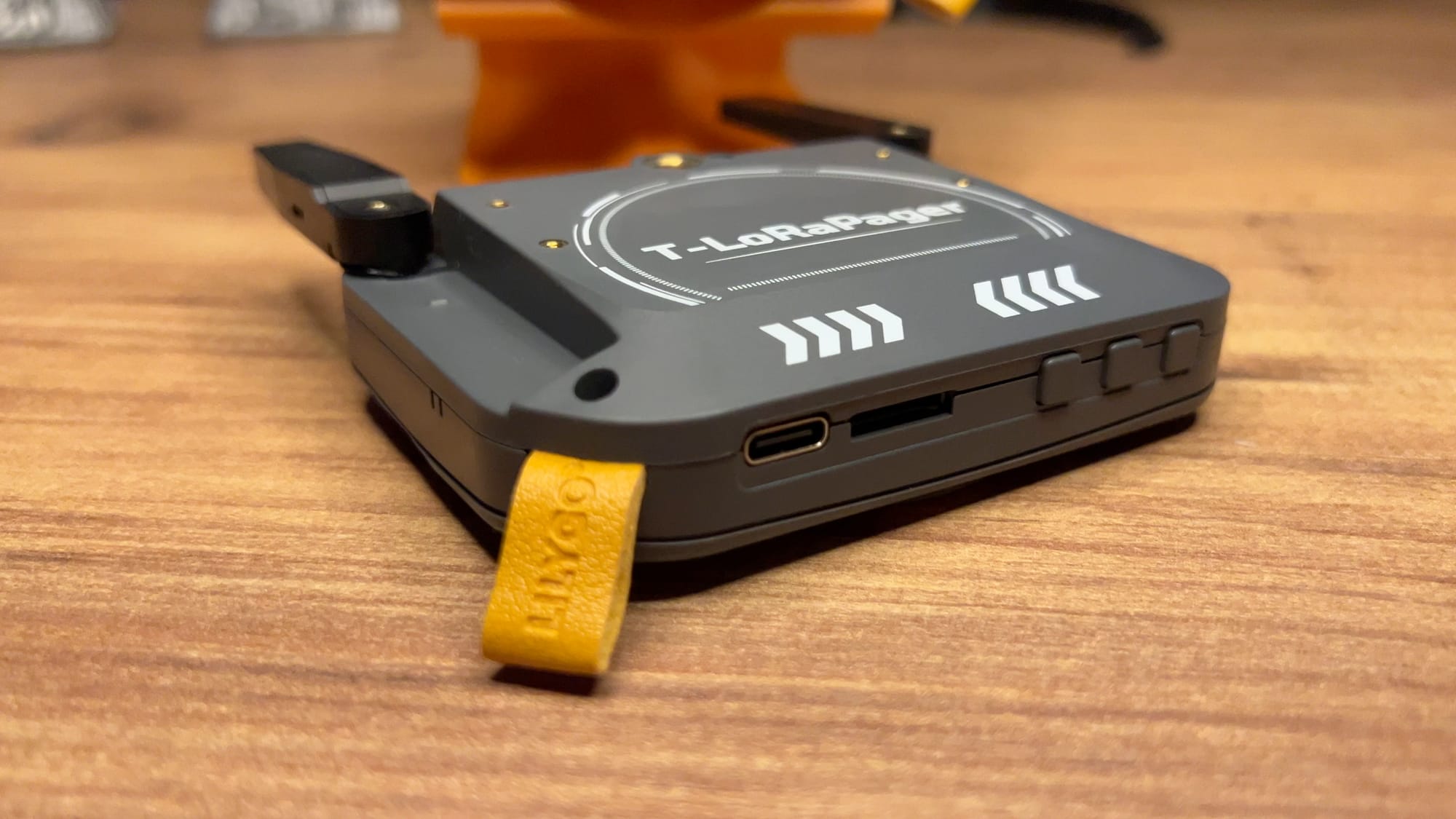
Three buttons on the bottom, none of them labelled. Working inward: the outer one is Reset, the middle is Boot, and the innermost is Power.
That order isn't intuitive, and it bites hardest exactly when you're already annoyed after flashing. The documented recovery is hold BOOT, tap RESET, release BOOT, which is hard to execute when you can't tell which is which. We repeatedly got the device stuck on reset or stuck in DFU and had to work through combinations blind.
The buttons are also stiff and oddly clicky, with no clean tactile confirmation, so you often can't tell whether a press registered and end up pressing harder than you should have to. On a device this well built, three unlabelled ambiguous buttons in a row feels like something nobody caught.
Powering off is part of the same story: it does fully power down rather than sleep, but only after a long press, and there's no feedback telling you it worked.
No Charge Indicator, Which Is a Bigger Deal Than It Sounds
Plug it in and nothing happens. No LED, no screen wake, no indication of any kind that the device is charging. It doesn't power on when you connect it either. You just have to trust it.
For what it's worth, charging is quick, roughly 45 minutes from flat to full — and the device doesn't get warm doing it. But on a device with this much attention to detail elsewhere, the missing charge LED is a genuine annoyance.
No Water Resistance
There's no IP rating. That's the norm rather than the exception, sealing something with a headphone jack, an SD slot, a speaker grille and two antenna hinges is hard and expensive. The ThinkNode M3 and MeshTracker X1 manage IP66 precisely because they have no ports, no screen and no moving parts.
It does sting slightly more here, though, because the case is openable, it's held together with screws, but the battery isn't designed to be user-swapped. A device that isn't sealed and also isn't easily serviceable is the worst of both worlds. If LILYGO ever does a v2, a pop-off back with a replaceable cell would be the single best change they could make.
Hardware and Specs, What's Actually Inside
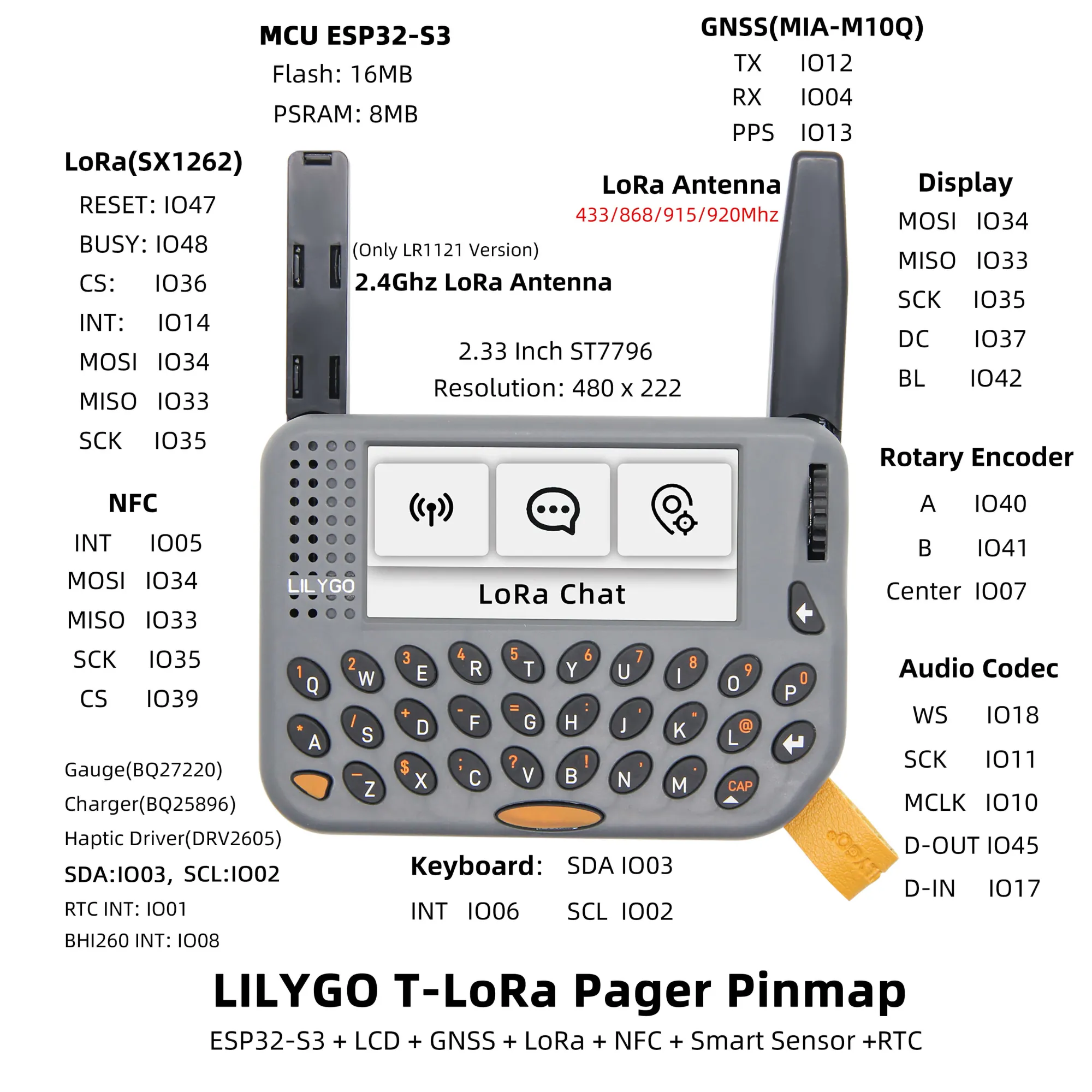
Open the spec sheet and this stops looking like a mesh radio.
MCU: ESP32-S3. Dual-core Xtensa LX7 at 240MHz, 16MB QSPI flash, 8MB QSPI PSRAM. Four times the flash of a ThinkNode M2, and the reason it can run a colour LVGL interface at all.
Display: 2.33" IPS, 480 × 222, ST7796, with an AW9364 16-level backlight driver. The widest aspect ratio on any Meshtastic handheld, roughly 2.16:1.
GNSS: u-blox MIA-M10Q. Four-constellation concurrent. A genuinely good receiver, the M10 series is a step above the budget GNSS you find at this price. Single-band L1. If you want the background on why constellation and band matter, we covered it here: Why Your Meshtastic Node Sees More Satellites.
IMU: Bosch BHI260AP. Not a plain accelerometer, a self-learning AI sensor hub with its own processor that can run activity recognition without waking the ESP32. In mesh firmware it's a wake-on-motion sensor. The interesting capability sits unused.
NFC: ST25R3916. Full reader/writer. Meshtastic does nothing with it, but the factory firmware does, and the included sticker reads fine.
Audio: ES8311 codec driving an Nsiway NS4150B 3W Class-D amp, a speaker, a microphone and a headphone jack.
Power: TI BQ25896 charger + TI BQ27220 fuel gauge. The BQ27220 is a coulomb-counting gas gauge, which in theory means an accurate battery percentage rather than the voltage-guessing most Meshtastic devices do. In practice, see below.
Haptics: TI DRV2605. A real haptic driver, and unlike the IMU and the NFC, mesh firmware actually uses it.
Also on board: NXP PCF85063A RTC, XL9555 GPIO expander, microSD slot (up to 32GB FAT32), rotary encoder with push-select, and a 2×8 2.54mm expansion header.


